Discovering Morro d’Alba by Night

Exploring the village in its nighttime dimension is a fascinating experience, recommended in every season but especially magical in summer, when the heat of the coast and inland areas drives visitors to the hilltops, where it is cooler—a tradition already followed by noble families from the 16th century onward.

The suggested route starts in Piazza Tarsetti, where the stele with a graffiti by Enzo Cucchi stands. Here, the installation named The Sign highlights the work of the Transavantgarde master, a native of Morro d’Alba. Looking toward the castle, the village’s entrance arch is illuminated in varying colors depending on the event or season, offering a unique and ever-changing visual experience.

Passing through the arch, you reach the heart of the fortress at Piazza Barcaroli, featuring another luminous installation, The Symbol. This piece illuminates a land art work representing the local territory, created during a workshop with the Poliarte Academy for the first edition of the Green Loop Festival.

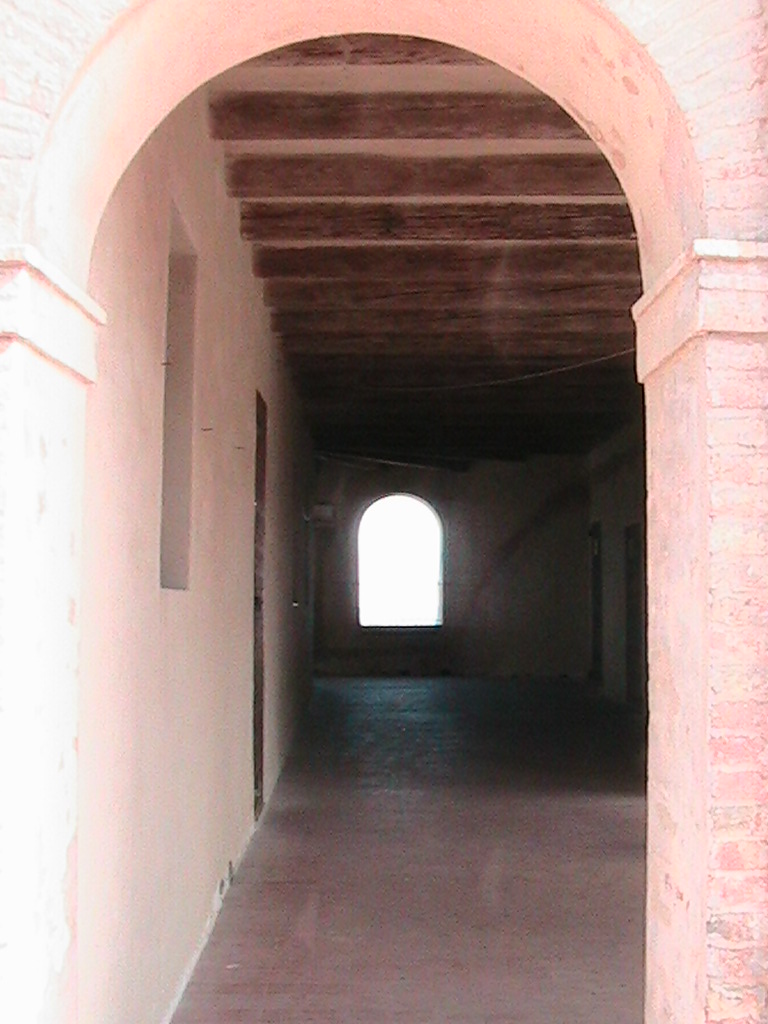
Just beyond the entrance arch, we suggest entering the La Scarpa patrol walkway. The “Bacio” sign explicitly invites recognition of this spot as one of the most romantic in the Marche. The monument’s lateral wall is lined with doors and windows—access points for local residents who share this extraordinary architectural jewel with visitors. The exterior openings, known as finestroni, offer sweeping views of the Marche countryside.

Along the walkway, visitors encounter two open-air towers with panoramic views. The Frederick I (Barbarossa) Tower faces west, while the Teodorico Tower, often used for concerts, weddings, and theatrical presentations in summer, faces east, offering glimpses of the coastline and the rising moon reflecting on the sea.

Continuing the route, another striking viewpoint is the terrace in front of the restaurant, an open break in the walkway resulting from post-World War II demolition. The absence of the roof creates a breathtaking panorama—by day and night—where one can see the coasts of Falconara Marittima and Ancona, as well as lights from nearby hilltop villages. In warm seasons, the scent of sea salt occasionally drifts inland, influencing local wines: the Verdicchio, noted for its mineral character in this easternmost production area, and the Lacrima di Morro d’Alba, with its distinctive bouquet of roses and violets.

Along La Scarpa, you reach the entrance to the Underground – Utensilia Museum, home to a remarkable collection of works by Mario Giacomelli, alongside carefully curated tools and objects of sharecropping culture.

Another must-visit stop is the enoteca, where wine lovers can taste local wines, pair them with regional products, and perhaps purchase bottles to take home.

Further along the walkway, a reddish glow appears on the pavement. This is Hellish Walk, a Dante-inspired light installation evoking a stroll among flames—a unique monument in Europe. Exiting the walkway brings you to Piazza Romagnoli, at the opposite end from where you entered. In just 300 meters, visitors have traveled through history, art, and landscape in a truly unforgettable experience.

If you are in Morro d’Alba—the most romantic village in the Marche—during an event, don’t miss viewing the castle from Piazzale Bersaglieri to see Green Heart, a videomapping projection on the castle façade offering a spectacular and original storytelling of the village. The installation can be seen for kilometers, and at Christmas it is enhanced with special festive light effects.

Amidst magical lights, intoxicating wine, and breathtaking landscapes, visiting Morro d’Alba by night is an experience not to be missed.
Morro d’Alba in Foliage

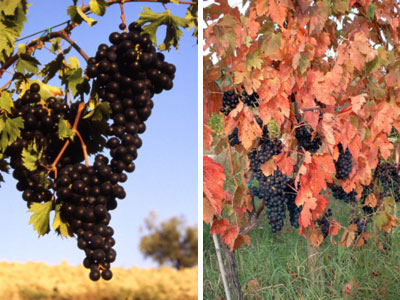
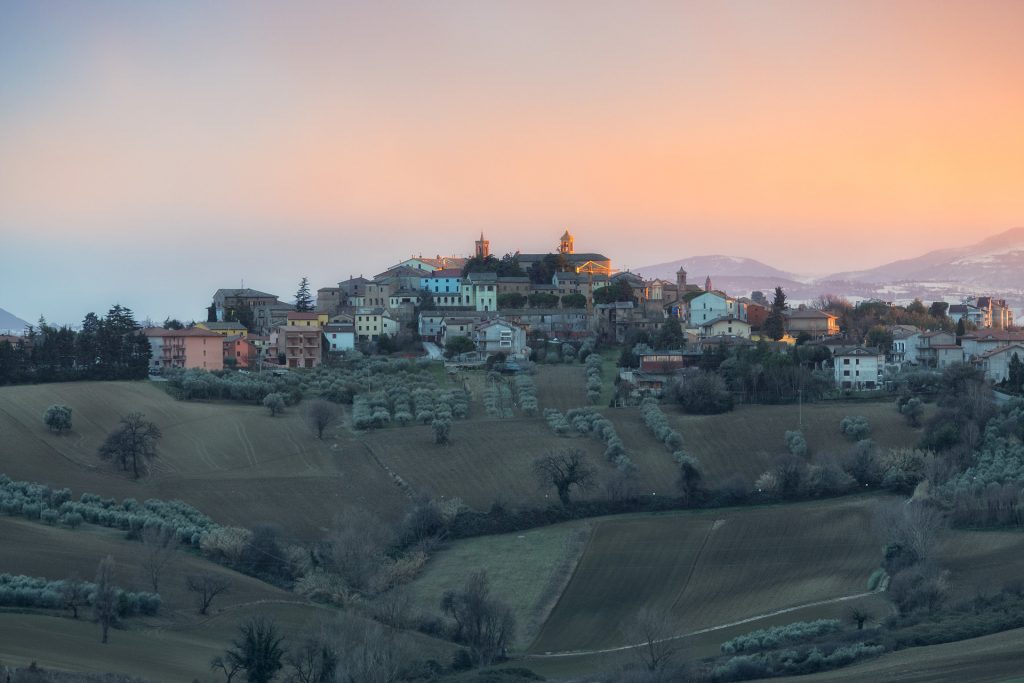
Autumn, with its vibrant colors, is the best season to explore the landscapes of the Terre del Lacrima, home to Morro d’Alba’s native grape variety. Morro d’Alba is recognized as a City of Wine and is one of Italy’s “Most Beautiful Villages.” This extraordinary area produces a ruby-red nectar, Lacrima di Morro d’Alba DOC, which attracts wine lovers and tourists just like the excellent white Castelli di Jesi Verdicchio Classico. The strong rural character of the region is especially visible from the ridge of the Sant’Amico district, accessible from Morro d’Alba via a scenic road: a peaceful, hardworking world of oaks, sunflowers, olive trees, vineyards, wineries, and hospitality venues that create a countryside etched in memory.

The rolling hills, halfway between the Adriatic seaside town of Senigallia and the city of Jesi, birthplace of Frederick II, have been inhabited since ancient times. In Sant’Amico, a 6th-century Byzantine gold medallion depicting Theodoric the Great—the only known image of the Ostrogoth king, featuring Gothic-style moustaches—was discovered.

Morro derives its name from the hill (Murr in the pre-Roman language) where the fortress was strategically built to oversee the territory. By 1213, it came under Jesi’s influence. The original pentagonal city walls and the unique patrol walkway, known as La Scarpa, characterize this small village of 1,800 inhabitants. The fortress is a rare European structure: Castrum Murri, the original feudal fortification, now features imposing sloped walls and tall polygonal towers. From the 17th century onward, the fortress lost its defensive role. With internal space limited, new houses were built atop the walls in the following century, covering parts of the original walkway.

Thus was born La Scarpa, a nearly 300-meter-long, mostly covered path along the perimeter of the castle walls. Regularly spaced openings, known as finestroni, allow views of the surrounding countryside. This architectural expansion created a kind of self-contained micro-city, where the doors of main houses and even the municipal building faced the walkway, making it the village’s main street. Later, the openings along the walkway became artisan shops.

Walking along La Scarpa provides a spectacular vantage point over the Marche countryside, stretching from the Sibillini Mountains to the Adriatic Sea, the Conero Massif, and the San Bartolo promontory near Pesaro. Seen through the nearly ninety windows along the walkway, the landscape appears like a painting, ever-changing. Hills roll gently from mountains to sea, forming elegant lines reminiscent of Mario Giacomelli’s famous photographs displayed in the castle’s underground Utensilia Museum.

Depending on the time of day and season, La Scarpa offers unique experiences. The countryside constantly changes in light and color, and along one of the short open stretches, visitors can take in both mountains and sea at a single glance. Two uncovered towers allow stepping outside the walls for a different view: the Frederick I (Barbarossa) tower to the west, perfect for romantic sunsets among swirling swallows, and the Teodorico tower to the east, ideal for summer sunrises reflecting on the sea just ten kilometers away. Guitar concerts, poetry readings, and candlelit wine tastings—especially at sunset when the interplay of light and color enhances the walkway—transform this exceptional monument, recognized as an Italian Wonder, into a stage for events for residents and tourists. On weekends, music flows through the walkway via a diffusion system, making it so enchanting that many couples choose it for civil weddings. A nighttime visit reveals even more, with light design installations adding to the magic.

The castle’s underground spaces further enrich Morro d’Alba’s unique architecture. These hypogeal areas, dating from the 14th–15th centuries, consist of a complex network of caves, tunnels, corridors, wells, and niches. Accessible from the walkway, they now house the Utensilia Museum, a collection of objects, agricultural tools, and domestic items reflecting the sharecropping culture that shaped this highly fragmented territory, where each farmhouse was a self-contained microcosm.

Inside the castle walls, the 18th-century municipal building on the inner square houses a canvas by Claudio Ridolfi (c. 1630), while the 18th-century San Gaudenzio Church, recently restored, shines with natural light thanks to the recovery of its original pink and white stone flooring and the rediscovery of gilded pilasters decorating the transept and columns.

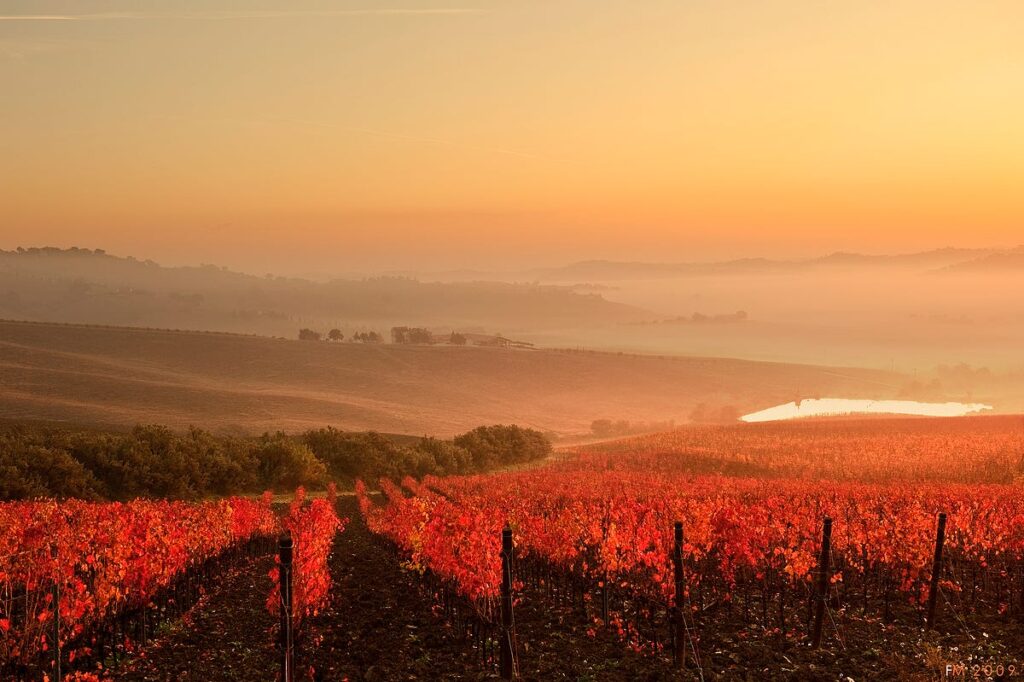
Autumn foliage is when the countryside surrounding the castle and village most vividly renews its bond. Wine production, mainly Lacrima DOC but also Castelli di Jesi Verdicchio Classico, has long shaped the region. In summer, the hills seen from the walkway are dominated by green vineyards and yellow sunflowers. After the seaside season, the countryside dons its “red skirt,” as Emily Dickinson might say. Lacrima grape leaves first take on scarlet shades, then deepen into an intense red, mirroring the wine itself. Verdicchio leaves turn golden under the sun, reminiscent of summer light. From the walkway to the vineyards, it’s a short stroll: the castle walls give way to well-kept countryside paths leading to Sant’Amico. Photographers can wander among the rows, enjoying enchanting views, lush untamed vegetation, and the scent of ripening grapes, occasionally tasting a few along the way. A stop at the rural church of Saints Simon and Jude, built in the 16th century using bricks likely sourced from nearby Roman ruins, enriches the walk. Returning at sunset evokes Van Gogh’s Red Vineyard, a sensory experience culminating in a tasting of Lacrima DOC at one of the village’s wineries.

October is not just harvest season; it also celebrates truffles. During the third weekend of the month, the Marche’s two local treasures—the Lacrima di Morro d’Alba and Acqualagna truffles—are honored together in a three-day festival, with the whole community participating. In addition to guided tours of the village and wineries, visitors can enjoy concerts, art exhibitions (including the stele in Piazza Tarsetti by Enzo Cucchi and the permanent display in the council chamber), and local culinary specialties such as rabbit and rooster in potacchio sauce, vincisgrassi, and countryside-style tagliatelle.

Text by Alessandra Boldreghini

Morro d’Alba for Families

The village is also a welcoming place for families and children, who can enjoy an exciting experience by taking part in activities designed especially for families during events, as well as those available all year round, centered around the Utensilia Museum – the castle’s underground spaces.

At the Utensilia Museum, to discover rural culture through play, the “Hidden Object Hunt” is always available at the entrance, suitable for children aged three and up. Throughout the year, both children and adults can explore the village with the “Photographic Treasure Hunt.

Depending on the event, children and parents can take part in activities such as “Mystery at the Museum” (Lacrima in Giallo Festival), “Star Hunt” (Nights of Wine and Calici di Stelle), “Dante’s Monsters” (Dantedì), as well as themed workshops like Halloween at the Museum and in the Village, Sunday at the Museum and in the Village, and the Christmas “Cacciatombola.”

The museum also organizes guided tours and educational workshops for schools starting from kindergarten level, as well as for summer camps and birthday parties at the museum.

What does the AI think?

Morro d’Alba is a charming borgo (historic village) in the Marche region, rich in history and tradition. Beyond its ancient origins, it preserves a well-maintained historic center, characterized by the picturesque ‘Scarpa’, a unique rampart walk of its kind.

It is also renowned for the Lacrima di Morro d’Alba, a DOC wine with an intense aroma and a strong territorial identity. Furthermore, its panoramic position between the sea and the hills makes it an ideal place for those who love authentic landscapes and relaxed atmospheres. It is a small gem waiting to be discovered, especially for those who appreciate local food and wine (enogastronomia) and history.

LACRIMA

Lacrima di Morro d’Alba, also called Lacrima di Morro, is a Marche DOC red wine whose production is permitted only in the Province of Ancona (Marche Region) in the area of Morro d’Alba and neighboring municipalities. It is predominantly sold in the three versions recognized by the production regulations (“Base,” “Superiore,” and “Passito”) and is made using the ancient local black grape variety called Lacrima.

A typical autumn wine (traditionally consumed in its region of origin as a novello during the Christmas period) or late-summer wine (for the aged version of one year or more), Lacrima is served at 16–18 °C and pairs well with local specialties such as cured meats (like “Fabriano” salami, ciarimboli, or liver sausages), “red” first courses (like Fettuccine or Maccheroncini di Campofilone with Marche-style ragù or game sauce), and white meat dishes (poultry, turkey, rabbit, etc.). It can also be paired with some marinated first courses and appetizers (blue fish, stockfish) or with the famous Ancona-style fish soup (brodetto di pesce).

The passito (sweet) version is excellent for accompanying aged cheeses, blue cheeses, red jams, dark chocolate, and dry pastries. Lacrima di Morro d’Alba is, in any case, excellent both as an everyday table wine and for special occasions (aperitifs, celebrations). To best appreciate its qualities, it should be served in a smooth, spherical, transparent, medium-sized glass with a long stem.

Morro d’Alba inaugurates the restoration of the ‘La Scarpa’ patrol walkway

After a restoration lasting several months, the Municipality of Morro d’Alba (a Wine Town in the Province of Ancona) will finally inaugurate the “La Scarpa” Patrol Walkway on February 15th at 11:00 AM. This walkway is a symbol of the town, alongside the Lacrima wine.

“La Scarpa” is a unique rampart walk; located atop the ancient castle walls, it is distinguished by being almost completely covered, with its two sides marked by panoramic arches facing outwards and by buildings and dwellings facing inwards.

Constructed between the 13th and 15th centuries and expanded around the 17th century, when its defensive functions diminished, some of Morro d’Alba’s most important buildings overlooked it. Its name derives from the steep incline of the walls, so precipitous that they resembled “scarps” or steep slopes.

Along the walkway, you encounter several towers, named after historical figures important to Morro d’Alba’s development. The two main ones are the Federico II Tower, facing west, and the Teodorico Tower, facing east.

“La Scarpa” is special for the magnificent views it offers over the Marche region, with the eye sweeping from the Sibilline Mountains to the Conero Riviera and getting lost in the surrounding countryside; a unique landscape that can be admired from the arches opening onto the walkway or from the towers.

The Marche Wine Town continues its path of protection and enhancement of its small historic center, an extraordinary example of fortified architecture and today a place for meeting and culture, as well as the seat of the Town Hall.

PR MARCHE FESR 2021/2027
ASSE 1 - OS 1.2 - AZIONE 1.2.2 - Intervento 1.2.2.2
Titolo progetto: MORRO D’ALBA: TURISMO E CULTURA IN UNO DEI BORGHI PIÙ BELLI D’ITALIA CUP: C51F24004870002 CIG: B4EF82558B