La Scarpa – Castle Walkway
Details
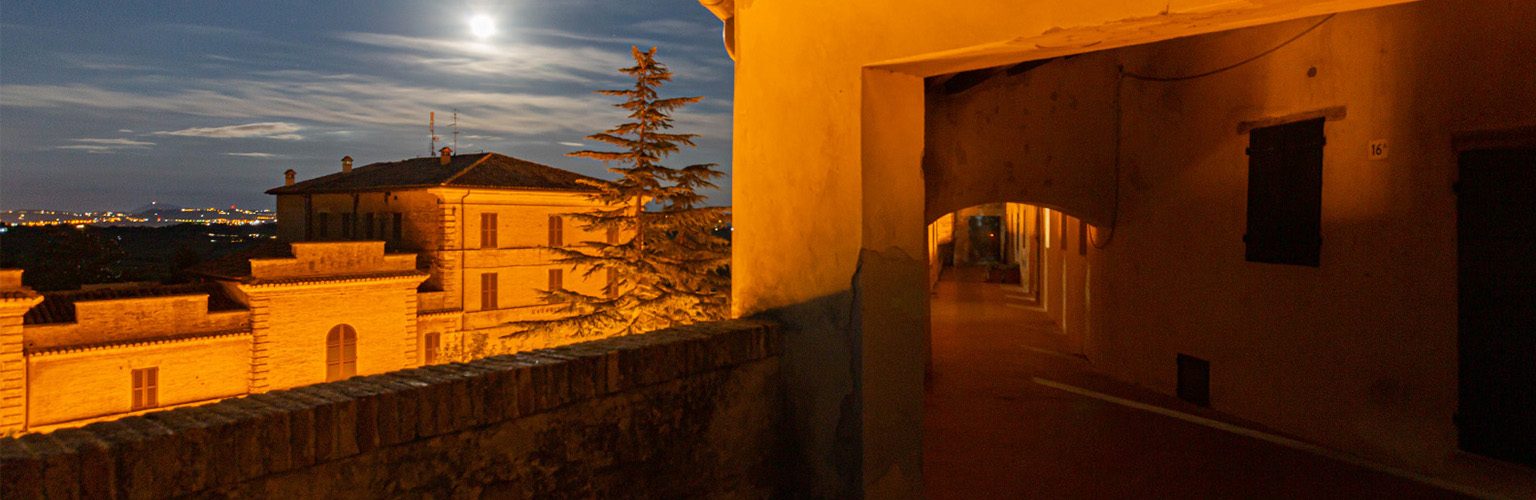
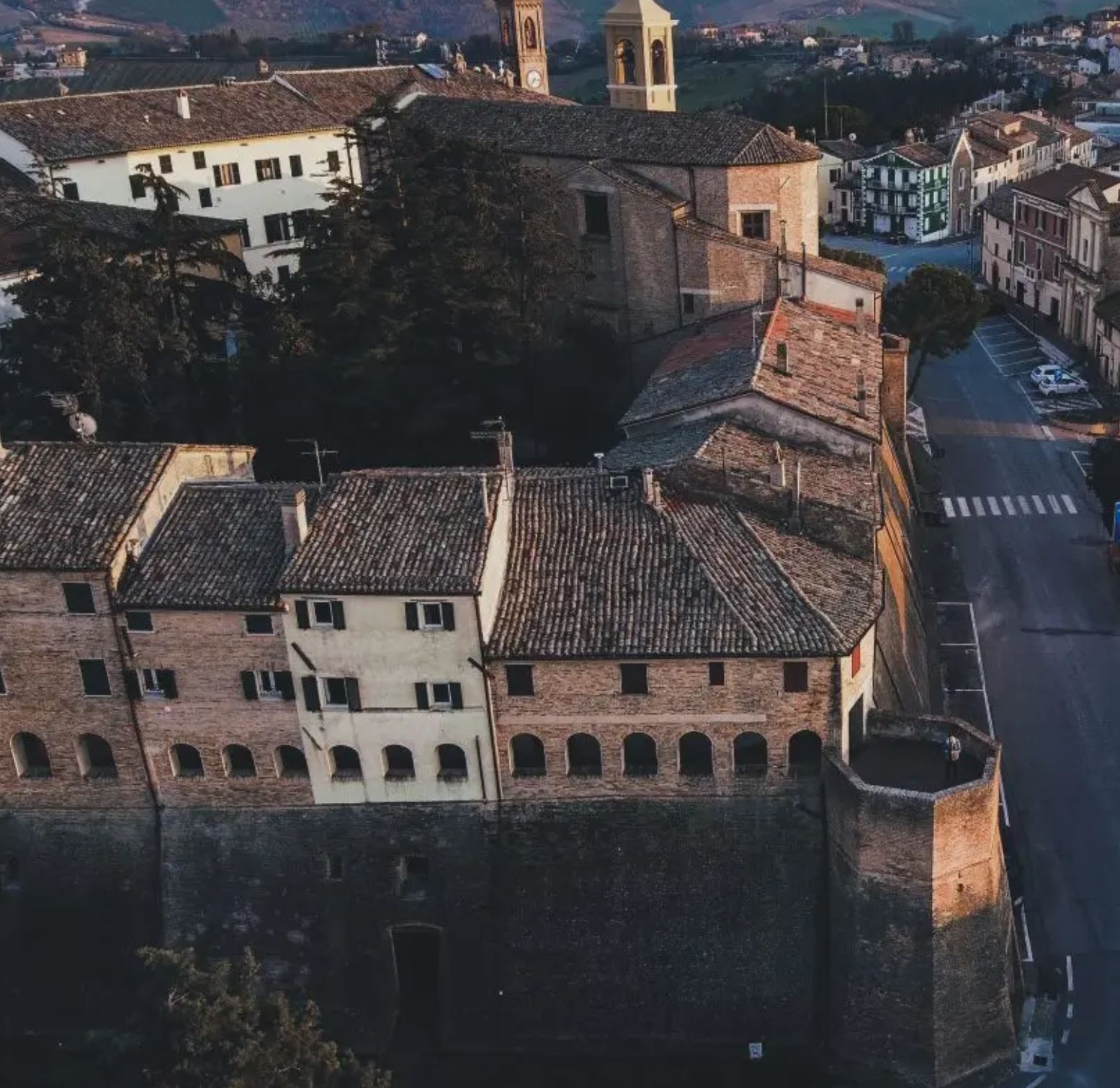
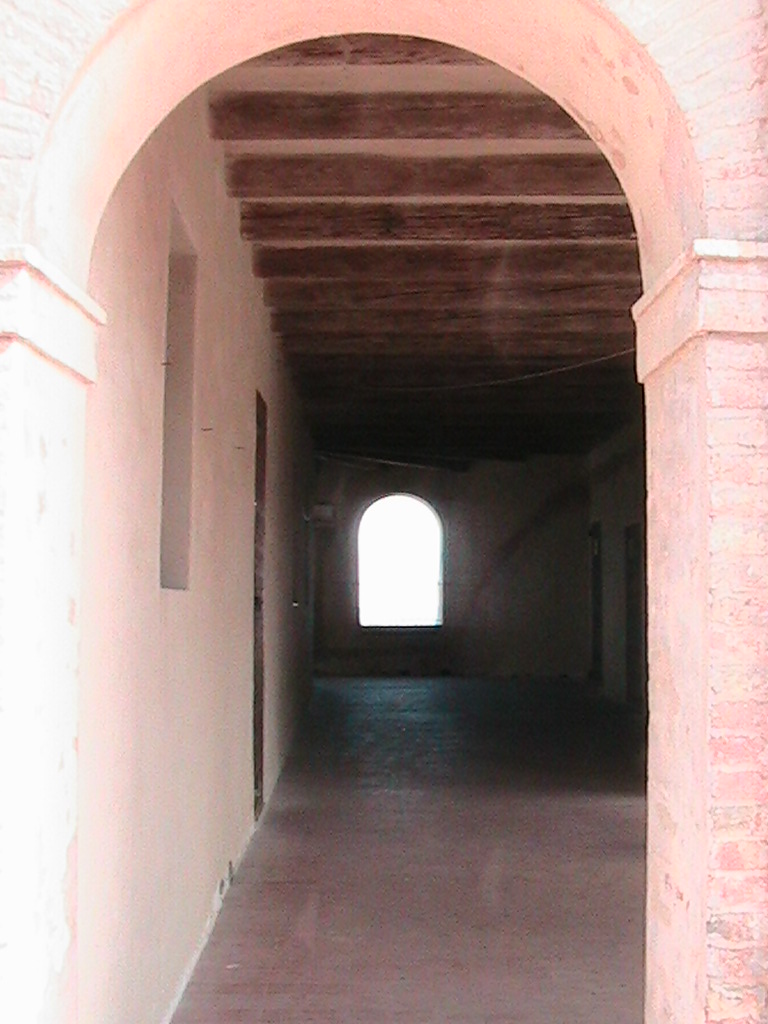
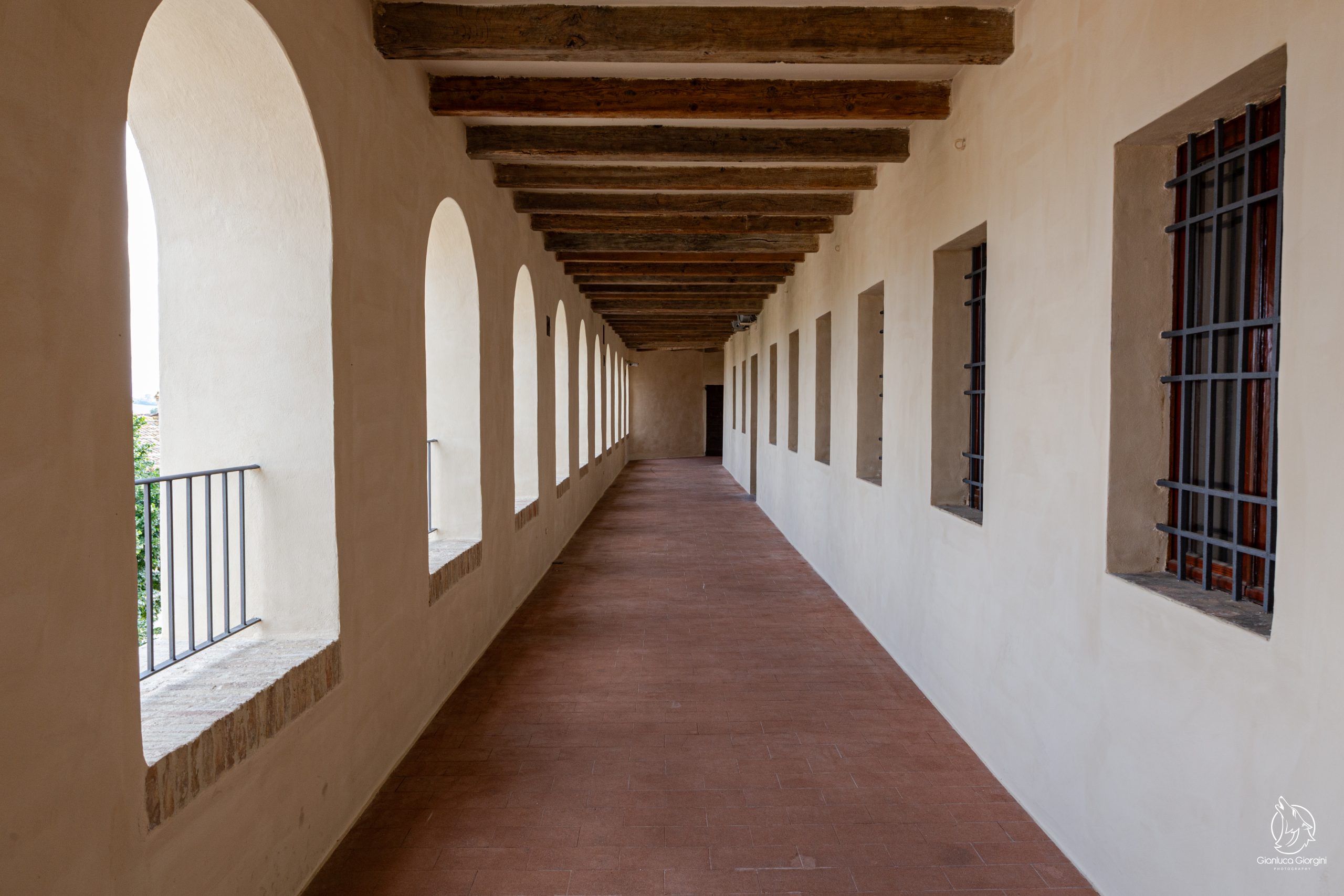
The camminamento di ronda that runs along all the castle walls of the village of Morro d’Alba is unique in Europe. It is called “La Scarpa,” referring to the outer castle walls, which are sloped (scarpate). Originally, it was the village’s main street, lined with the most important houses, housing the entrance to the town hall and later the entrances to artisan workshops. Today, thanks to its excellent preservation, it offers a walk with extraordinary views of the Marche countryside, gently sloping from the Sibillini Mountains down to the sea and Monte Conero. The towers are located at the vertices of the castle’s original pentagonal plan and were named after figures and elements connected to the village’s history, which is closely tied to Frederico II (his coat of arms is reproduced on the civic tower visible from Piazza Tarsetti, outside the village).
In particular, the tower called “Teodorico” is often chosen for wedding ceremonies, taking advantage of the extraordinary panorama and the special atmosphere at certain times of the day, such as at sunset. The same locations are used by the local administration for chamber music concerts during the summer. The entire camminamento di ronda is equipped with a sound system that allows the walk and the ceremony to be accompanied by music, which can be chosen by the bride and groom. In this case, the rental cost of the public space also covers the SIAE fee and seating for guests.
THE TOWERS OF THE VILLAGE OF MORRO D’ALBA
The towers marking the perimeter of the castle are named after elements of local history or features of its historical and artistic heritage. Stupor Mundi is the tower overlooking Piazza Tarsetti, named in honor of Frederick II, who was born in Jesi, of which the village was part of the county. The bas-relief on the civic tower next to it suggests this ancient connection.
Costanza is the next tower, located in front of the nursing home, named after Constance of Hauteville, mother of Frederick II, born in Jesi (26/12/1194). Teodorico is one of the two uncovered towers, so named because it faces the area of Sant’Amico, where a small medallion was found—the only known coin effigy of Theodoric the Great.
The section of the patrol walkway near this tower is used for cultural events: book presentations, readings, concerts, and even civil weddings. Finally, there is the tower of Frederick I, known as Barbarossa, which faces west. According to legend, the grandfather of Frederick II of Swabia followed the Siege of Ancona from Castrum Murri. Here, after asking local farmers to bring him the finest produce of the land, he came to appreciate grape juice already made from the native Lacrima grape variety.
Gallery